
Follow on Instagram
Connect on LinkedIn

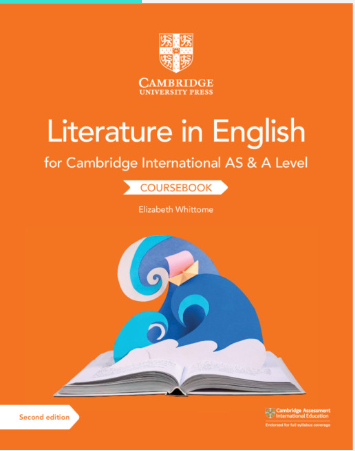
Cambridge International AS & A Level English – Literature (9695)
Wishlist Share

About Course

Syllabus overview

Learners following the Cambridge International AS and A Level English syllabus will study a range of texts in the three main forms: prose, poetry and drama. Set texts are offered from a wide range of different periods and cultures.

Learners will develop skills of reading and analysis of texts, and are encouraged to undertake wider reading to aid understanding of the texts studied. They will learn skills of effective and appropriate communication including the ability to discuss the critical context of texts.

What Will You Learn?

  • Skills you will build
  • Core literary competencies
  • Close reading — analyse how language, form, and structure create meaning
  • Critical argument — build and sustain a well-evidenced interpretation in essays
  • Contextual awareness — connect texts to their historical, cultural, and literary contexts
  • Comparison — link texts, ideas, and techniques across and within genres

Course Content

Syllabus overview
Aims: The aims describe the purposes of a course based on this syllabus. The aims are to enable students to: • enjoy the experience of reading literature • develop an appreciation of and an informed personal response to literature in English in a range of texts in different forms, and from different periods and cultures • communicate effectively, accurately and appropriately in written form • develop the interdependent skills of reading, analysis and communication • analyse and evaluate the methods writers use in creating meaning and effects • encourage wider reading and an understanding of how it may contribute to personal development • build a firm foundation for further study of literature.

Content overview
Cambridge International AS & A Level Literature in English will provide learners with the opportunity to gain further knowledge and understanding of international poetry, prose and drama, with candidates studying all genres at both levels. A wide range of inspiring set texts have been carefully selected to offer a depth and breadth of literary study and to encourage lively and stimulating classroom discussion. At AS Level learners will study three set texts and prepare for one unseen text. At A Level they will study four further set texts. Throughout the AS and A Level course learners will be encouraged to practise their skills in close reading through the study of literary extracts and unseen texts; developing skills of analysis and interpretation of texts, alongside their expression of personal response to the texts studied. Learners will explore the conventions of genres of texts and the contexts in which works have been written, read and received. At A Level learners will further develop their subject knowledge through the evaluation of opinions and ideas, both their own and those of others. These are highly transferable skills and can help learners in other subject areas, as well as equipping them for higher education and/or employment.

Assessment overview – Drama and Poetry – 2 hours – 50 marks
Candidates answer two questions: one question from Section A: Drama and one question from Section B: Poetry. Externally assessed 50% of the AS Level 25% of the A Level

Paper 2 – Prose and Unseen – 2 hours – 50 marks
Candidates answer two questions: one question from Section A: Prose and one question from Section B: Unseen. Externally assessed 50% of the AS Level 25% of the A Level

Paper 3 – Shakespeare and Drama – 2 hours – 50 marks
Candidates answer two questions: one question from Section A: Shakespeare and one question from Section B: Drama. Externally assessed 25% of the A Level

Paper 4 – Pre- and Post-1900 Poetry and Prose – 2 hours – 50 marks
Candidates answer two questions: one question from Section A: Pre-1900 Poetry and Prose, and one question from Section B: Post-1900 Poetry and Prose. Candidates respond to both a poetry question and a prose question. Externally assessed 25% of the A Level

Assessment objectives
The assessment objectives (AOs) are: AO1 Knowledge and understanding Respond with understanding to literary texts in a variety of forms, from different cultures; with an appreciation of relevant contexts that illuminate readings of the texts. AO2 Analysis Analyse ways in which writers’ choices of language, form and structure shape meanings and effects. AO3 Personal response Produce informed independent opinions and interpretations of literary texts. AO4 Communication Communicate a relevant, structured and supported response appropriate to literary study. AO5 Evaluation of opinion Discuss and evaluate varying opinions and interpretations of literary texts.

Weighting for assessment objectives
Assessment objectives as a percentage of each qualification Assessment objective Weighting in AS Level % Weighting in A Level % AO1 Knowledge and understanding 25 20 AO2 Analysis 25 20 AO3 Personal response 25 20 AO4 Communication 25 20 AO5 Evaluation of opinion 0 20 Total 100 100 Assessment objectives as a percentage of each component Assessment objective Weighting in components % Paper 1 Paper 2 Paper 3 Paper 4 AO1 Knowledge and understanding 25 25 20 20 AO2 Analysis 25 25 20 20 AO3 Personal response 25 25 20 20 AO4 Communication 25 25 20 20 AO5 Evaluation of opinion 0 0 20 20 Total 100 100 100 100

Set texts for examination in 2026
The set texts listed below are for examination in 2026. Set texts regularly rotate on the syllabus and may change from one year of examination to the next. Before you begin teaching, check the set text list for the year in which your candidates will take their examinations.

Paper 1 Drama and Poetry
Learners study two set texts, one from Section A and one from Section B. Candidates answer two questions, one from each section. Section A Drama: Edward Albee - Who’s Afraid of Virginia Woolf? Errol John - Moon on a Rainbow Shawl William Shakespeare - The Tempest John Webster - The Duchess of Malfi Section B Poetry: Maya Angelou - And Still I Rise William Blake - Selected Poems from Songs of Innocence and of Experience Sylvia Plath - Selected Poems from Ariel (1965) Songs of Ourselves, Volume 2 - Selected Poems (new selection for 2026)

Paper 2 Prose and Unseen
Learners study one set text from Section A. For Section B, learners prepare to respond to an unseen text that may be poetry, prose or drama. Candidates answer two questions, one from each section. Section A Prose: Kiran Desai - The Inheritance of Loss Stories of Ourselves, Volume 1 - Selected Stories (new selection from Volume 1 for 2024, 2025 and 2026) Evelyn Waugh - A Handful of Dust Colson Whitehead - The Underground Railroad Section B Unseen : Unseen Text

Paper 3 Shakespeare and Drama
Learners study two set texts, one from Section A and one from Section B. Candidates answer two questions, one from each section. Section A Shakespeare: William Shakespeare - Hamlet William Shakespeare - The Taming of the Shrew Section B Drama: Lynn Nottage - Sweat Eugene O’Neill - Long Day’s Journey Into Night Wole Soyinka - Kongi’s Harvest

Paper 4 Pre- and Post-1900 Poetry and Prose
Learners study two set texts, one from Section A and one from Section B. They must study one poetry text and one prose text. Candidates answer two questions. They answer one question from each section. One question must be on a poetry text and one question must be on a prose text. Section A Pre-1900 Poetry and Prose: Jane Austen - Pride and Prejudice *Geoffrey Chaucer - The Wife of Bath’s Prologue and Tale George Eliot - Middlemarch Thomas Hardy - Jude the Obscure *William Shakespeare - Selected Sonnets *Walt Whitman - Selected Poems from Leaves of Grass (1891–1892) Section B Post-1900 Poetry and Prose: J M Coetzee - Waiting for the Barbarians *Louise Glück - Selected Poems from The Wild Iris Katherine Mansfield - Selected Stories Toni Morrison - Beloved *Gabriel Okara - Selected Poems from Collected Poems (2016) *Natasha Trethewey - Native Guard IMP: * Poetry texts are denoted by an asterisk. Candidates must answer one poetry and one prose question, each from a different section of the question paper.

Set poems and stories for examination in 2026 – Maya Angelou: And Still I rise Paper 1, Section B Poetry
Poems and stories for examination in 2026 are listed below. Title: A Kind of Love, Some Say Country Lover Remembrance Where We Belong, A Duet Phenomenal Woman Men Refusal Just For A Time Junkie Monkey Reel The Lesson California Prodigal My Arkansas Through the Inner City to the Suburbs Lady Luncheon Club Momma Welfare Roll The Singer Will Not Sing Willie To Beat the Child Was Bad Enough Woman Work One More Round The Traveler Kin The Memory Still I Rise Ain’t That Bad? Life Doesn’t Frighten Me Bump d’Bump On Aging In Retrospect Just Like Job Call Letters: Mrs. V.B. Thank You, Lord

William Blake: Selected Poems from Songs of Innocence and of Experience Paper 1, Section B Poetry
Title: Introduction The Shepherd The Lamb The Little Black Boy The Chimney Sweeper The Little Boy Lost The Little Boy Found A Cradle Song The Divine Image Holy Thursday Spring Nurse’s Song A Dream On Anothers Sorrow Introduction Earth’s Answer Holy Thursday The Little Girl Lost The Little Girl Found The Chimney Sweeper Nurses Song The Fly The Angel The Tyger My Pretty Rose Tree The Little Vagabond London The Human Abstract A Poison Tree A Little Boy Lost The School Boy

Sylvia Plath: Selected Poems from Ariel (1965) Paper 1, Section B Poetry
Title: Morning Song Sheep in Fog The Applicant Lady Lazarus Tulips Cut Elm Poppies in October Ariel Death & Co. Getting There Medusa The Moon and the Yew Tree A Birthday Present Letter in November The Rival Daddy You’re Fever 103° Stings Little Fugue Years The Munich Mannequins Paralytic Balloons Poppies in July Kindness Edge

Songs of Ourselves: The Cambridge Assessment International Education Anthology of Poetry in English, Volume 2 (ISBN 9781108462280) Paper 1, Section B Poetry
Title: Last Sonnet The Bargain To My Dear and Loving Husband Tiger in the Menagerie lion heart Heart and Mind In Praise of Creation Upon a Wasp Chilled with Cold ‘Blessed by the Indifference…’ (from The Flowers of Crete) The Poplar-Field Afternoon with Irish Cows London Snow Excelsior The Border Builder The Migrant The White House The Song of the Shirt To a Millionaire Amoretti, Sonnet 86 Homecoming I Years had been from Home The Exequy Old Man & Very Old Man Late Wisdom ‘I Have a Rendezvous with Death’ Song The Dead Knight From the Coptic I Dream of You… Sleep

Stories of Ourselves, The Cambridge Assessment International Education Anthology of Stories in English, Volume 1 (ISBN 9781108462297) Paper 2, Section A Prose
Story: The Yellow Wallpaper - Charlotte Perkins Gilman The Son’s Veto - Thomas Hardy The Door in the Wall - H G Wells An Englishman’s Home - Evelyn Waugh The Prison - Bernard Malamud Billennium - J G Ballard The People Before - Maurice Shadbolt Five-Twenty - Patrick White Report on the Threatened City - Doris Lessing Games at Twilight - Anita Desai My Greatest Ambition - Morris Lurie To Da-duh, in Memoriam - Paule Marshall Of White Hairs and Cricket - Rohinton Mistry Tyres - Adam Thorpe Real Time - Amit Chaudhuri

William Shakespeare: Selected Sonnets Paper 4, Section A Poetry
Title: Sonnet 2 Sonnet 12 Sonnet 16 Sonnet 17 Sonnet 23 Sonnet 29 Sonnet 54 Sonnet 55 Sonnet 60 Sonnet 63 Sonnet 65 Sonnet 71 Sonnet 75 Sonnet 76 Sonnet 81 Sonnet 84 Sonnet 94 Sonnet 97 Sonnet 104 Sonnet 115 Sonnet 116 Sonnet 123 Sonnet 124 Sonnet 127 Sonnet 129 Sonnet 130 Sonnet 138 Sonnet 141 Sonnet 144 Sonnet 147

Walt Whitman: Selected Poems from Leaves of Grass (1891–1892) Paper 4, Section A Poetry
Title: A Noiseless Patient Spider As I Ebb’d with the Ocean of Life Beat! Beat! Drums! How Solemn as One by One I Hear America Singing I Saw in Louisiana a Live-Oak Growing I Sing the Body Electric In Paths Untrodden O Captain! My Captain! O Me! O Life! Out of the Cradle Endlessly Rocking Out of the Rolling Ocean the Crowd Pioneers! O Pioneers! The Wound-Dresser Whoever You Are Holding Me Now in Hand

Louise Glück: Selected Poems from The Wild Iris Paper 4, Section B Poetry
Title: The Wild Iris Matins Matins Trillium Lamium Clear Morning End of Winter Matins Retreating Wind The Garden The Hawthorn Tree Love in Moonlight Witchgrass Matins Matins Heaven and Earth The Doorway Midsummer Vespers End of Summer Vespers Vespers Early Darkness The White Rose Presque Isle Retreating Light Vespers Lullaby September Twilight The White Lilies

Katherine Mansfield: Selected Stories Paper 4, Section B Prose
Story: Frau Brechenmacher Attends a Wedding Something Childish but very Natural The Wind Blows Prelude A Dill Pickle ‘Je ne parle pas français’ Bliss Miss Brill The Daughters of the Late Colonel Life of Ma Parker Marriage à la Mode At the Bay The Voyage The Garden Party A Cup of Tea

Gabriel Okara: Selected Poems from Collected Poems (2016) Paper 4, Section B Poetry
Title: The Call of the River Nun Once Upon a Time Pianos and Drums Spirit of the Wind New Year’s Eve Midnight You Laughed and Laughed and Laughed The Fisherman’s Invocation I Am Only a Name Suddenly the Air Cracks Metaphor of a War Lady and Her Wig Welcome Home The Dreamer Bent Double with Weight Complex Matter Beauty beyond Words Morbidity We Live to Kill and Kill to Live Ovation Seeker Mass Transit Buses Contractors Rural Dweller Rise and Shine A Boy’s Dream Babydom Wisdom Waiting for a Coming Salt of the Earth

Details of the assessment – Paper 1 Drama and Poetry – Written paper, 2 hours, 50 marks
This paper has two sections, Section A: Drama and Section B: Poetry. Each section is worth 25 marks. Candidates must answer two questions: one question from a choice of Drama set texts in Section A and one question from a choice of Poetry set texts in Section B. On each set text, candidates will have a choice between two questions (a) or (b). Each requires an essay length response. The (b) question will be based on a passage or a poem from the set text printed on the question paper. Candidates may choose the type of question they wish to answer. Candidates must demonstrate the following: • knowledge and understanding of the set text they have studied and an appreciation of relevant contexts • analysis of the ways in which writers’ choices shape meaning and create effects • an informed, independent opinion about the text studied • appropriate communication of literary ideas and arguments. All questions on this paper assess four assessment objectives: AO1, AO2, AO3 and AO4. Set texts are not allowed in the examination room. Set texts are listed in section 3 Subject content. Dictionaries may not be used.

Paper 2 Prose and Unseen – Written paper, 2 hours, 50 marks
This paper has two sections, Section A: Prose and Section B: Unseen. Each section is worth 25 marks. Candidates must answer two questions: one question from a choice of Prose set texts in Section A and one question from a choice of two previously unseen texts in Section B. Section A: Prose On each set text, candidates will have a choice between two questions (a) or (b). Each requires an essay length response. The (b) question will be based on a passage from the set text printed on the question paper. Candidates may choose the type of question they wish to answer. Candidates must demonstrate the following: • knowledge and understanding of the set text they have studied and an appreciation of relevant contexts • analysis of the ways in which writers’ choices shape meaning and create effects • an informed, independent opinion about the text studied • appropriate communication of literary ideas and arguments. All questions in this section assess four assessment objectives: AO1, AO2, AO3 and AO4. Set texts are not allowed in the examination room. Set texts are listed in section 3 Subject content. Dictionaries may not be used. Section B: Unseen Candidates answer one question from a choice of two. • Candidates write a response to previously unseen literary material printed on the question paper. • The passages cover two of the categories: prose, poetry and drama. • All passages are from works originally written in English. The questions will test candidates’ ability to read literature critically and to demonstrate, by informed discussion and opinion, an understanding of the ways in which meaning is expressed through a writer’s choices of language, form and structure. The authors and dates of the passages will not be given. Knowledge of the literary or historical background is not expected. Candidates must demonstrate the following: • knowledge and understanding of the text type which helps to inform a response • analysis of the ways in which writers’ choices shape meaning and create effects • an informed, independent opinion about the text studied • appropriate communication of literary ideas and arguments. All questions in this section assess four assessment objectives: AO1, AO2, AO3 and AO4. Dictionaries may not be used.

Paper 3 Shakespeare and Drama Written paper, 2 hours, 50 marks
This paper has two sections, Section A: Shakespeare and Section B: Drama. Each section is worth 25 marks. Candidates must answer two questions: one question from a choice of Shakespeare plays in Section A and one question from a choice of Drama set texts in Section B. On each set text, candidates will have a choice between two questions (a) or (b). Each requires an essay length response. The (b) question will be based on a passage from the set text printed on the question paper. Candidates may choose the type of question they wish to answer. Candidates must demonstrate the following: • knowledge and understanding of the set text they have studied and an appreciation of relevant contexts • analysis of the ways in which writers’ choices shape meaning and create effects • an informed, independent opinion about the text studied • appropriate communication of literary ideas and arguments • an ability to discuss and evaluate different opinions and interpretations of texts. All questions on this paper assess all five assessment objectives: AO1, AO2, AO3, AO4 and AO5. Set texts are not allowed in the examination room. Set texts are listed in section 3 Subject content. Dictionaries may not be used

Paper 4 Pre- and Post-1900 Poetry and Prose – Written paper, 2 hours, 50 marks
This paper has two sections, Section A: Pre-1900 Poetry and Prose and Section B: Post-1900 Poetry and Prose. Each section is worth 25 marks. Candidates must answer two questions: one question from a choice of pre-1900 poetry and prose set texts in Section A and one question from a choice of post-1900 poetry and prose set texts in Section B. Candidates must write one essay on a poetry set text and one essay on a prose set text. On each set text, candidates will have a choice between two questions (a) or (b). Each requires an essay length response. The (b) question will be based on a passage or a poem from the set text printed on the question paper. Candidates may choose the type of question they wish to answer. Candidates must demonstrate the following: • knowledge and understanding of the set text they have studied and an appreciation of relevant contexts • analysis of the ways in which writers’ choices shape meaning and create effects • an informed, independent opinion about the text studied • appropriate communication of literary ideas and arguments • an ability to discuss and evaluate different opinions and interpretations of texts. All questions on this paper assess all five assessment objectives: AO1, AO2, AO3, AO4 and AO5. Set texts are not allowed in the examination room. Set texts are listed in section 3 Subject content. Dictionaries may not be used.

Student Ratings & Reviews

No Review Yet
No Review Yet
Scroll to Top