
Follow on Instagram
Connect on LinkedIn

Computer Science 101
Wishlist Share

About Course

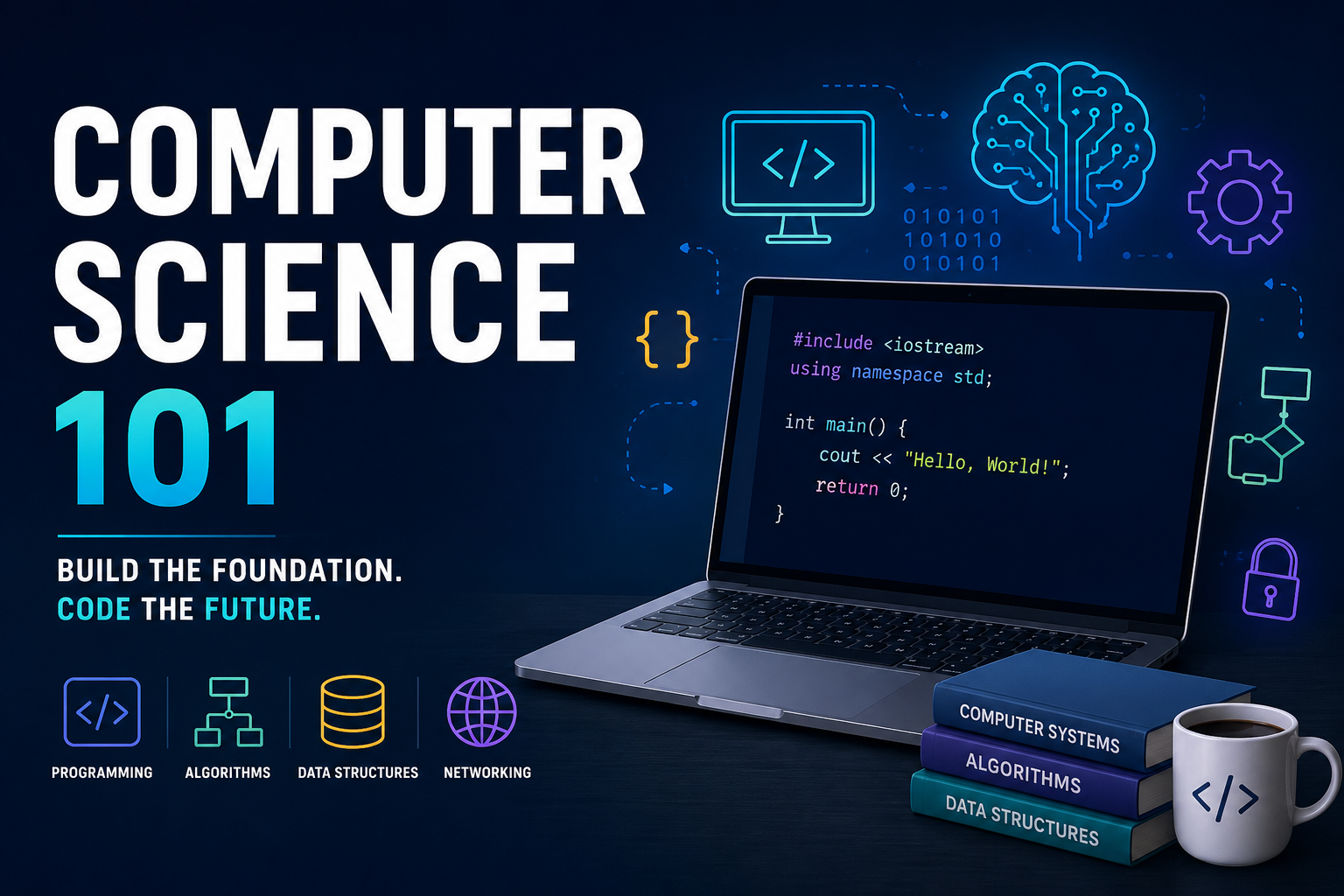
Computer Science 101 is a beginner-friendly course designed to introduce students to the fundamental concepts of computer science and modern technology. This course provides a strong foundation in computational thinking, problem-solving, programming basics, and how computers work in the digital world.

Students will learn about computer systems, software and hardware components, algorithms, data representation, networking fundamentals, and introductory programming concepts. Through practical examples and hands-on exercises, learners will develop logical thinking skills and gain confidence in writing simple programs. 

What Will You Learn?

  • Fundamentals of computer science and computing
  • Computer hardware and software basics
  • Problem-solving and computational thinking
  • Introduction to algorithms and flowcharts
  • Programming fundamentals (variables, data types, operators, and control structures)
  • Functions and modular programming concepts
  • Basic data structures and their applications
  • Internet, networking, and cybersecurity fundamentals
  • Best practices for coding and software development

Course Content

Introduction to Computer Science
Understand what computer science is, its major fields, and how computing impacts everyday life. Students will explore careers in technology and the role of software in modern society. Learning Outcomes Define computer science and its applications. Identify different areas of computing. Understand the role of technology in various industries.

Computer Hardware and Software Fundamentals
Learn the basic components of a computer system, including processors, memory, storage devices, operating systems, and application software. Learning Outcomes Distinguish between hardware and software. Identify major computer components and their functions. Understand the purpose of operating systems.

Binary Numbers and Data Representation
Discover how computers represent and process information using binary numbers, characters, images, audio, and video data. Learning Outcomes Understand the binary number system. Explain how data is stored digitally. Convert simple decimal numbers to binary and vice versa.

Computational Thinking and Problem Solving
Develop logical thinking skills by learning how to break complex problems into smaller, manageable steps. Learning Outcomes Apply decomposition and pattern recognition techniques. Design step-by-step solutions to problems. Think logically and systematically.

Introduction to Programming
Explore the fundamentals of programming and understand how instructions are written and executed by a computer. Learning Outcomes Understand the purpose of programming languages. Write simple programs. Explain the program execution process.

Variables, Data Types, and Operators
Learn how programs store and manipulate data using variables, different data types, and operators. Learning Outcomes Create and use variables. Understand common data types. Perform calculations and data manipulation.

Decision Making and Control Structures
Learn how programs make decisions and execute different actions based on conditions. Learning Outcomes Use conditional statements. Implement logical decision-making in programs. Solve simple problems using branching logic.

Student Ratings & Reviews

No Review Yet
No Review Yet
Scroll to Top